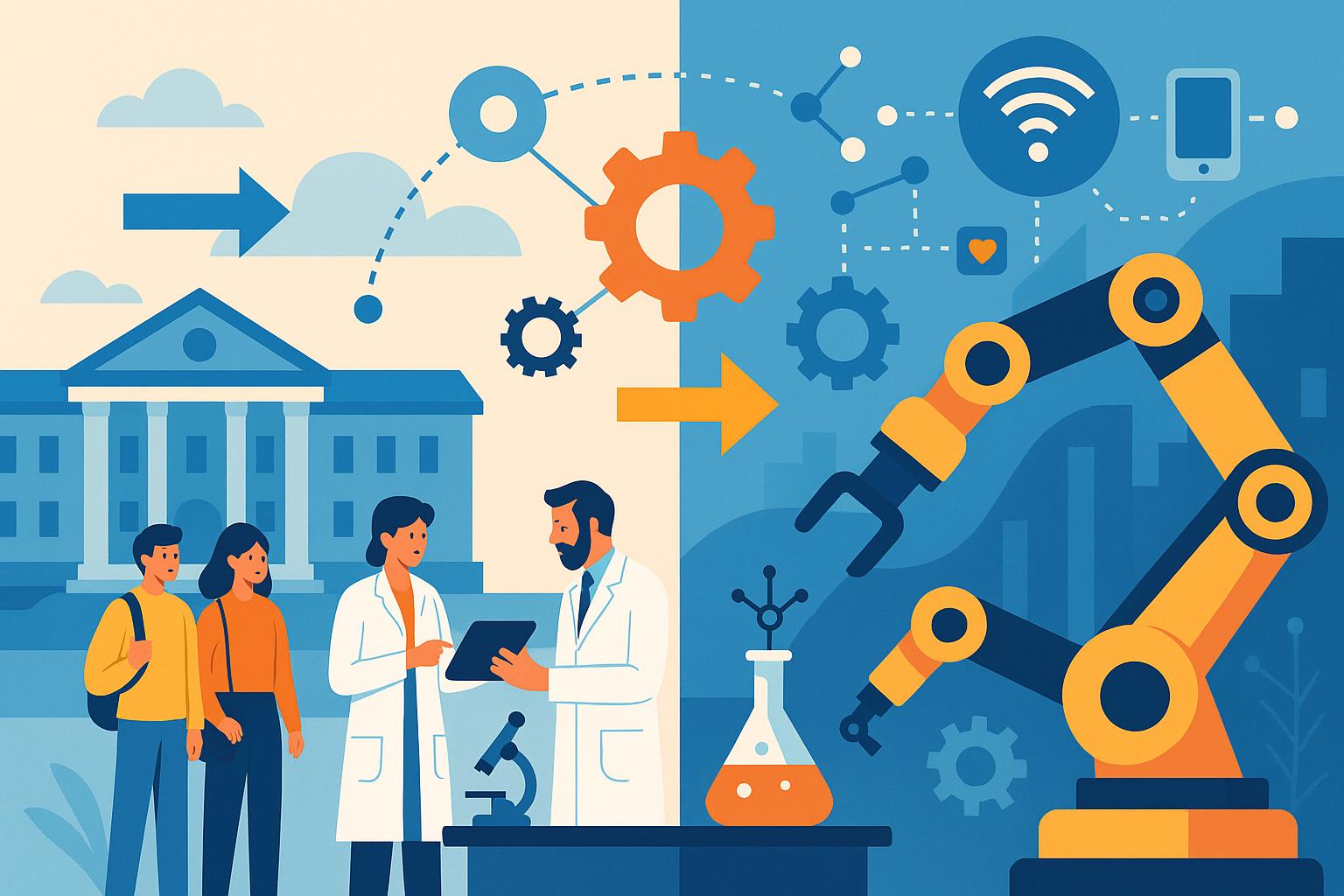
The Partnership Between University College London (UCL) and GlaxoSmithKline (GSK)
A further excellent example of collaboration between universities and businesses is the partnership between University College London (UCL) and GlaxoSmithKline (GSK), one of the world’s largest pharmaceutical companies. Their collaboration focuses on advancing medical research and the development of new therapies, particularly in the field of immunology and vaccines.
In 2015, UCL and GSK formed a partnership to establish a research collaboration aimed at accelerating the discovery of new treatments for diseases, such as cancer, asthma, and autoimmune disorders. This collaboration brings together UCL’s world-leading research expertise, particularly in cell biology and immunology, and GSK’s vast experience in developing and commercializing new drugs.
A key component of this partnership is the development of novel immunotherapies. UCL researchers and GSK scientists have worked together to explore new ways to harness the immune system to target and treat diseases more effectively. This collaboration has led to groundbreaking discoveries in the field of cancer immunotherapy, where treatments designed to activate the immune system are being developed to attack cancer cells more precisely, improving the effectiveness of cancer treatments and minimizing side effects.
Furthermore, the partnership benefits both UCL and GSK in multiple ways. For UCL, the collaboration provides access to GSK’s advanced technologies, funding, and expertise in drug development, allowing researchers to conduct more applied research that can directly translate into clinical treatments. For GSK, the collaboration allows access to the cutting-edge scientific knowledge from UCL’s researchers, offering insights into areas like disease mechanisms and new drug targets that could lead to the next generation of therapies.
This collaboration also extends to the academic community, as it provides opportunities for students and researchers to engage with real-world pharmaceutical challenges. Many students and early-career scientists benefit from internships, collaborative projects, and the opportunity to contribute to research that can directly impact patients’ lives.
The partnership between UCL and GSK is an excellent example of how university-business collaborations can drive scientific progress, particularly in sectors like healthcare and pharmaceuticals, where academic research can have a direct impact on developing life-changing treatments for global health challenges. By combining their strengths, both organizations are contributing to advancements in medical science that could ultimately lead to improved treatments and therapies for millions of people around the world.